Different Types of Rubber Roofing, With Pros And Cons

For waterproofing flat roofs, recommended rubber roofing Atlanta specialists can provide you with waterproofing systems with different types of durable materials.

rubber roofing Atlanta

There are several types of rubber membranes, each with its advantages.

PVC membranes

  • Verified technology
  • High degree of fire resistance
  • The possibility of obtaining customized architectural solutions (colors, profiles and roof logos)
  • Easy to handle and install
  • Suitable for different climatic conditions
  • Fast installation, independent of climatic conditions (it can be installed at low temperatures, and even when it is raining)
  • Good vapor permeability
  • Great flexibility

Con: over time, the additives in the polyvinyl chloride evaporate and the membrane can become brittle.

TPO membranes

  • High chemical resistance
  • Suitable for direct application to substrates such as bitumen, EPS insulation and XPS
  • No plasticizer (no migration/contamination or transpiration)
  • Easy to maintain
  • Suitable to be used and exposed in severe climatic conditions
  • Installation without the use of fire sources
  • Environmentally friendly product
  • Proven performance and durability for 35 years

Con: TPO is a fairly new coating solution, so manufacturers are still working on improving the formulas in its composition. Consequently, not all TPO membranes have the same qualities.

EPDM membranes

  • Excellent stability against the influences of weather, sunlight, acids and caustic solutions
  • Long lasting flexibility and elasticity
  • Traction resistant
  • Suitable for uneven substrates
  • Membrane adjustment is possible up to 30 minutes after fixing
  • Easy application in the corners
  • It does not require additional mechanical fixing
  • Resistant to ozone and UV rays
  • Durability 50 years

Con: They are more expensive than other types of rubber roofing
 

Related Posts

Questions for Your Atlanta Commercial Roofer

Getting a new commercial roof is not an easy feat. If you haven’t worked with a professional roofer before, you’ll have to consider what questions you will ask about your project and also go deeper in finding out exactly what the installation process should entail.

Atlanta commercial roofing contractors

According to esteemed Atlanta commercial roofing contractors, here are just some of the most important questions that you’ll have to ask:

  • What type of roof should you get? Commercial roofing can get somewhat complicated, since you don’t want to spend too much money, but you might have to settle on a minimum budget, if you don’t want to spend a lot more money on repairs in the next few years.
  • How much do Atlanta’s humid summers influence a well-designed roof. You can consider built-up and TPO roofing to counteract Atlanta’s hot and humid summers, but the question is how will your roof be affected? Will you need any upgrades or special coatings? Much of the time, Atlanta commercial roofers will be able to answer these types of questions without much difficulty, since they are used to dealing with local concerns.
  • It’s a good idea to also inquire about necessary maintenance and preventive repairs – when it’s needed, what you can do to minimize damage, and how a good warranty can help you out. Your friendly Atlanta commercial roofer will quickly put your mind at ease regarding these issues.

Is Rubber Roofing More Effective Than Metal Roofs for Commercial Applications?

Atlanta commercial roofing contractor

Your choice of roofing materials is a complex matter, and can be influenced by several important factors. For instance, you may be interested in finding out which solution is more efficient –rubber roofing or metal roofing? Here is some insight from an A+ BBB accredited Atlanta commercial roofing contractor.

For one thing, rubber roofing does not allow water to seep into your commercial roof too easily. There are several different types of rubber roofs, including EPDM, PVC, TPO and rubber shingles. As compared to metal roofing, rubber roofing has the advantage of being more affordable, less maintenance, fireproof, and also recyclable. But it tends to be less resistant in case of extreme weather.

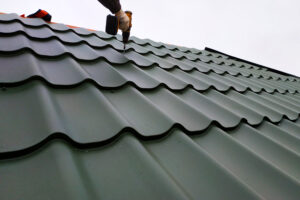
Metal roofs are extremely durable and can be found in different colors, finishes, and textures. But as compared to rubber, metal does not look as good due to its rough texture. Installation and materials tend to cost more than in the case of rubber, and this type of roof can be more difficult to fix.

So, if you want a cheap and easy-to-install roof fix for your commercial applications, you should go for rubber. But if you need a roof which has to withstand hard weather conditions, metal roofing is the best option for you. And both of these options can be installed over an existing roof.

3 Issues to Avoid When Installing Commercial Metal Roofs

metal roofing Atlanta

Commercial metal roofs are considerably less popular than residential metal roofing. However, even though EPDM, TPO, bitumen and other types of flat roofing systems have the spotlight for the time being, metal is one of the best and arguably the most durable type of roof used for commercial buildings.

If you want your metal roof to last for half a century as it’s supposed to, you’ll have to consider its most important installation requirements and long term care considerations. Here are some of the most basic ones to remember:

1. Don’t underestimate the importance of proper coating. Many types of metal will rust when exposed to rain, and the coating you choose will prevent that from happening.
2. Make sure the roof is properly fastened. Some metal panels are quite light, and they can be dislodged by strong winds if they are not properly fastened. Talk to a trusted metal roofing Atlanta contractor about this and make sure they give you all the right information.
3. Talk to your roofers about the specific long term maintenance solutions you’ll need to take into consideration. Metal might be low-maintenance but it still requires some care. If you don’t want to deal with it, ask your roofers about their long term maintenance plan and how much it would cost.