Maintenance Tasks for Flat Roofing

When it comes to the life expectancy of flat roofing, maintenance is among the most important tasks. Here are the essential maintenance activities that you should not neglect:

  • Semi-annual inspections – one of most important tasks to be performed on commercial roofing in Atlanta is to inspect the surface as well as the adjacent structures, such as the ventilation and the drainage pipes. It is very important to hire a flat roofing Atlanta professional for the process, that is the best way to ensure that all the issues are detected.
  • Timely repairs – the faults detected during the inspections should be tackled right away, as soon as possible after the inspection sessions. The step right after the inspection should be to discuss the roadmap for the repairs and to perform the interventions right away.
  • Maintenance for the landscape around – roofs can be severely damaged by the tree limbs and other vegetation debris that breaks off large trees and shrubs during windy periods or due to severe weakening. Roof maintenance should also involve the inspection and the trimming of any large trees that overhang the roof or that are located very close to the building to prevent any damage caused by that kind of impact.
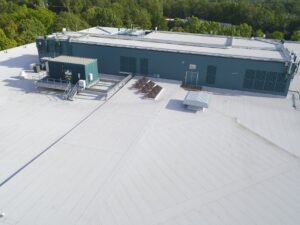

flat roofing Atlanta

Related Posts

Atlanta Roofing Technologies – Is EPDM the Same as Rubber Roofing?

EPDM roofing Atlanta

Put shortly… yes and no. EPDM stands for Ethylene Propylene Diene Monomer, which is a type of synthetic rubber. On the other hand, rubber roofing is a broad term that can refer to any type of roofing material made from rubber. So, EPDM is a type of rubber roofing, but not all rubber roofing is EPDM.

EPDM roofing is popular due to its durability, weather resistance, and energy efficiency. A highly skilled EPDM roofing Atlanta company confirm that it is commonly used on flat roofs and can last up to 50 years with proper maintenance. It is also easy to install and can be a cost-effective solution in the long run.

Rubber roofing, on the other hand, can refer to a variety of materials, including EPDM, but also TPO and PVC, for instance. It is important to note that not all rubber roofing options have the same durability and weather resistance as EPDM roofing. PVC and TPO have their unique characteristics, such as being highly resistant to UV radiation and chemical exposure, which makes them popular in commercial roofing applications. However, they may not be as flexible as EPDM and can be more expensive.

If you are considering getting a new roof or replacing an existing one, it is important to consult with a professional roofing contractor in Atlanta to help you understand the best roofing options for your needs and budget.

How to Care for Rubber Roofing in Atlanta

Atlanta commercial roofing contractors

Rubber roofing consists of vulcanized membranes, offering unmatched ozone and ultraviolet radiation resistance. Because these membranes do not contain flame retardants or plasticizers, their characteristics stay unchanged and stable over time, making them durable solutions to be used for roofing.

The main advantages of a rubber roof include:

  • High flexibility and elasticity – These membranes remain flexible up to temperatures of 45°C and have an elasticity of over 300%, which ensures their resistance to building movements and temperature changes.
  • Low operating costs – Rubber roof membranes require a low level of maintenance. Even after a long period of exposure, they can be easily repaired.

In this context, should you worry about caring for your rubber roof? Shortly, yes! If your roof has minimal maintenance requirements, that doesn’t mean you should ignore it.

Caring for your rubber roof in Atlanta should involve a periodic maintenance contract with a licensed roofing company. Practiced Atlanta commercial roofing contractors will check the roof once or twice a year to make sure everything is in order, and if minor problems are identified, they will be fixed before they get worse. The roof will also be cleaned.

Extra care is required when there are roof penetrations (HVAC units, solar panels, etc.).

How the Atlanta Climate Can Damage a Low-Quality Roof

commercial roofer Atlanta

The Atlanta climate, characterized by hot and humid summers and occasional severe weather events, can pose significant challenges to low-quality roofs in the region.

Atlanta experiences high temperatures during the summer months, which can cause the materials in a low-quality roof to deteriorate quickly. Intense heat and prolonged exposure to UV radiation can lead to cracking, warping, and fading of roofing materials. Over time, this can compromise the roof’s integrity and leak.

The humidity in Atlanta can be quite high, especially in the summer. Moisture can seep into the cracks and gaps of a low-quality roof, leading to mold, mildew, and rot growth. Moisture damage can weaken the roof structure and contribute to the development of leaks and water infiltration.

At the same time, Atlanta is prone to heavy rainfalls and severe storms, including thunderstorms and tropical systems. Low-quality roofs may have inadequate water resistance and poor drainage systems, making them vulnerable to water pooling, leaks, and potential water damage. Strong winds, which sometimes accompany storms, can dislodge the loosely attached roofing materials, compromising the roof’s integrity.

Because Atlanta occasionally experiences hailstorms and strong winds, especially during severe weather events, hailstones can cause dents, punctures, or cracks in low-quality roofing materials.

Consult with a trusted commercial roofer Atlanta area expert to determine the best roof needed to protect your commercial building.