
What Is Rubber Roofing Best Suited for?

rubber roofing Atlanta

If you did some research on the commercial roofing industry in Atlanta, you’ll find that the typical Atlanta commercial roofer will recommend some type of rubber as the most suitable roofing material for your new installation. There are a number of reasons for that, and most of them tie into the fact that rubber is such an impressive material when faced with adverse conditions:

  • Rubber is strong, and it’s less likely to be as easily damaged in a storm as other roofing materials. It doesn’t crack as easily during extreme weather conditions, and it’s significantly less high-maintenance in comparison to even some of the more expensive roofing systems.
  • A rubber roof is generally better suited for flat roofing systems. However, according to experienced rubber roofing Atlanta companies, because of its unique qualities, it can also be adapted to low-pitch roofs and its properties make it more resilient and impact-resistant than even some of the best sloped roofs.
  • One of the most important qualities of rubber is its increased flexibility. Although it normally wouldn’t have the same tensile strength as metal or slate, its flexibility makes it an ideal roofing material for fending off hail and strong winds. In fact, a well-designed rubber roof will require fewer repairs over time than the aforementioned roofs, whether they are used on commercial or residential buildings.
  • Synthetic rubber is generally cheap and long-lasting. It doesn’t easily allow for the growth of mold and moss, and the maintenance work will not cost you as much compared to wood, asphalt or slate.

 

Related Posts

Hiring an Atlanta Commercial Roofer for Rubber Roofing Repairs

rubber roofing Atlanta

Also known as rubber roofing, TPO contains elements that provide it with its flexibility, superior performance, energy-efficient and environmentally-conscious qualities. Before picking TPO, an experienced commercial roofer would advise their customer to consider the pros and cons of this type of roofing. However, a commercial roofer’s job does not end with the installation of the roof. It continues with maintenance and repair services according to the warranty that both the professional and the customer have agreed upon.

TPO roofing (Thermoplastic Polyolefin roofing) is a single-ply roofing membrane usually used for commercial roofing. It is an expensive option, but has high R-value rating. In general, its price ranges from three to seven dollars per square foot.

In addition, rubber roofing uses a type of rubber that reflects light and heat due to its bright white color. It also resists corrosion, mildew and algae growth. Moreover, it does not require pressure washing, therefore, lowering maintenance costs significantly. However, the quality of rubber roofing mostly depends on the manufacturer and the wide range of different thicknesses.

In Atlanta, rubber roofing is preferred for its specific coloring: pink, blue or green. These colors are naturally reflective. As a result, they reflect light and heat from the building so that the interior can be easily cooled down during summer.

There are many commercial roofers in Atlanta. However, choosing the right rubber roofing Atlanta specialist for rubber roofing repairs is no easy task. After a roof installation project is completed, maintenance should be sought with the same professional company that is bound by contract to provide services such as roof coating. The type of services required post-installation should be decided on after considering the following factors: roof visibility, location of the building, green initiatives, insulation and original construction materials. The estimate of rubber roofing repairs should include costs of materials, payment due dates and termination policy. To conclude, in terms of maintenance and repairs, the entire roofing system should be carefully considered before deciding on rubber roofing.

Do Roofers Use Drones for Roof Inspections?

It’s no secret that drones have pretty much taken over the world by now. A lot of people are using drones for everything from capturing drone footage of the surrounding landscape while they’re on vacation, to using drone videos to promote real estate or perform land surveys.

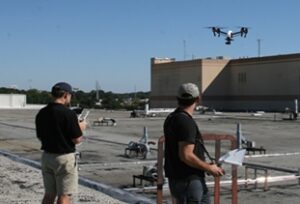
Roofers have also sought to profit from this advanced technology by using high quality drone footage to detect minuscule problems with roofing systems that seem like they’re doing great on the surface. With drones flying around taking pictures and videos, roofers can now get a literal bird’s eye view of your roof, examine the images in detail to find even the smallest dent or breakage, and get to the bottom of the most challenging roof maintenance and repair issues much quicker than ever before.

drone roof inspection

Roof inspections have become faster, easier to perform and more informative. Under the circumstances, it’s easy to see why drones have become so popular, not only as a source of stunning vacation footage, but also because of their use in industries such as roofing. So, next time you call on one of your local roofers to take care of your roof inspection and repair needs, consider a quality drone roof inspection service that provides UAV footage to give you an accurate description of exactly what is wrong with your roof.

What Are the Best Types of Rubber Roofing?

EPDM roofing Atlanta

Flat roofs require a pliable, waterproof cover material that performs well in circumstances where shingles and tiles don’t. Rubber is the most popular flat roof covering option. EPDM, PVC and TPO membranes are the best options in this category for the following reasons:

EPDM membranes

  • According to economical EPDM roofing Atlanta contractors, this membrane provides excellent stability against weathering, sun exposure, acids and caustic solutions
  • Long-lasting flexibility and elasticity
  • Traction resistant
  • Easy to apply, partly because they can be manufactured in large dimensions (up to 15m width and 60m length)
  • No additional mechanical fastening required
  • Unlimited aging resistance – this membrane does not contain plasticizers or antioxidants that would make it susceptible to migration or degradation
  • Chemically inert – the composition of the membrane remains constant because it is vulcanized
  • More environmentally friendly than other waterproofing materials
  • Compatibility with green roofs (root resistance) and photovoltaic systems

PVC membranes

  • Used for over 50 years
  • Strong fire resistance
  • Customized architectural solutions available (colors, profiles and roof logos)
  • Suitable for different climatic conditions
  • Quick installation independent of the weather (PVC membranes can be installed even in low temperatures or when it rains)
  • Vapor permeability
  • Great flexibility

TPO membranes

  • High chemical resistance
  • Suitable for direct application on substrates such as bitumen, EPS insulation, and XPS (polystyrene)
  • No plasticizer (no migration/contamination, or perspiration)
  • Long lifespan
  • Easy maintenance
  • Easy handling and installation (no need for fire sources)
  • Resistance to severe weather conditions
  • Environmentally friendly